
Google Ads can put your business in front of people actively searching for your products or services. But launching a campaign is only the starting point. Choosing the right keywords, writing relevant ads, managing bids, tracking conversions, and improving landing pages all influence how effectively your advertising budget is used.
This is where a Google PPC expert can add value. Rather than simply creating campaigns and monitoring clicks, a skilled PPC professional works on the different parts of the advertising process to improve traffic quality, conversions, and overall campaign performance.
Whether you are considering Google Ads for the first time or your existing campaigns are generating clicks without enough business, understanding what a PPC expert actually does can help you decide whether professional management makes sense.
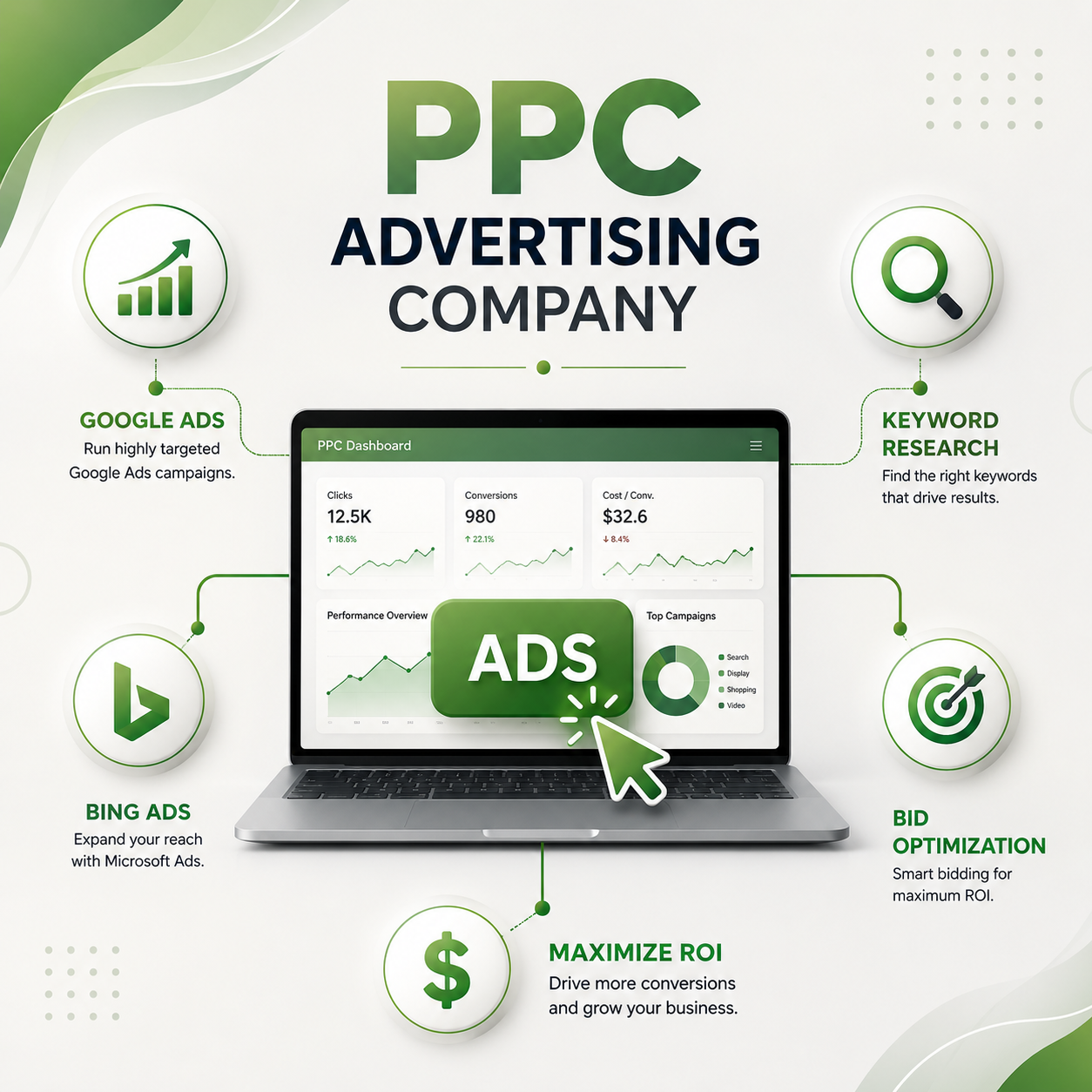
“Measure every action that moves your business forward.”
What Is Google PPC?
PPC stands for pay-per-click, a form of online advertising where advertisers generally pay when someone clicks their advertisement.
Google Ads is one of the most widely used PPC platforms. Search campaigns allow businesses to show ads when people search for relevant products, services, or solutions. Google also offers advertising across other parts of its ecosystem, including YouTube, Maps, Shopping, and other placements.
The basic concept sounds simple:
Someone searches → Your ad appears → They click → They visit your website → They take an action
But getting this process to work profitably requires considerably more than simply selecting a few keywords and setting a daily budget.
What Does a Google PPC Expert Do?
A Google PPC expert manages and improves paid search campaigns based on business objectives rather than focusing only on generating clicks.
Their responsibilities can include:
- Keyword research and selection
- Search intent analysis
- Campaign and ad group structure
- Ad copy development
- Bid and budget management
- Conversion tracking
- Search term analysis
- Negative keyword management
- Landing page evaluation
- Performance analysis
- Campaign testing
- Audience and location targeting
- Ongoing optimization
The exact approach depends on the business, industry, competition, budget, and campaign goals.
For example, an ecommerce business may focus heavily on product sales and conversion value, while a local service business may prioritize qualified calls and enquiry forms.
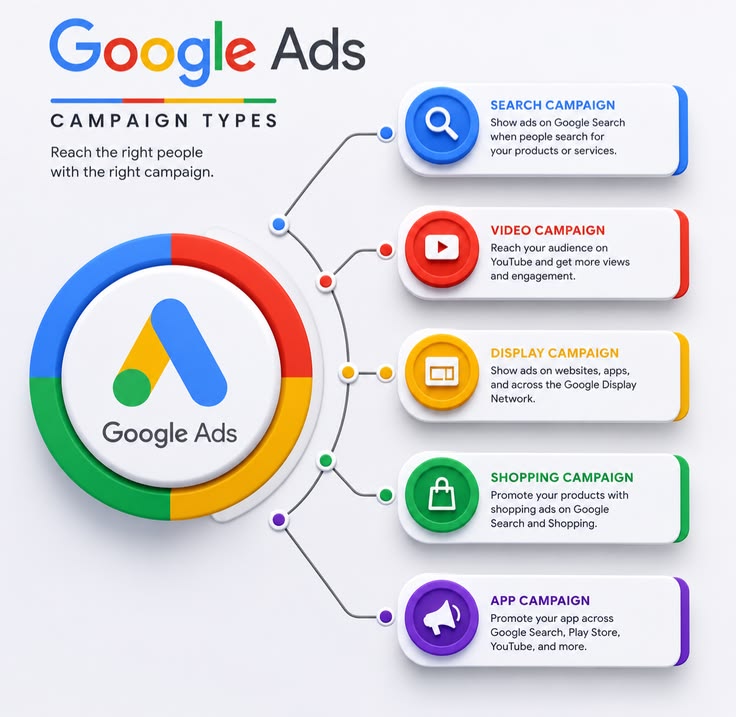
“Know which ads are driving real results.”
1. Keyword Research and Search Intent
Keywords are one of the foundations of Google Search campaigns.
However, selecting keywords simply because they have high search volume isn’t enough.
The more important question is:
What is the person actually trying to accomplish with that search?
Consider the difference between:
“running shoes”
and
“buy men’s running shoes online”
The second search provides a much stronger indication of purchasing intent.
A PPC professional evaluates search terms based on factors such as relevance, commercial intent, competition, expected traffic, and the business’s conversion goals.
Google also provides different keyword matching options that can influence how broadly ads can reach related searches. Broad match, for example, can expand reach to relevant searches beyond the exact keyword wording.
The objective isn’t necessarily to target the largest possible number of searches. It’s to identify searches that have the potential to generate valuable business outcomes.
2. Building the Right Campaign Structure
Campaign structure affects how easily an account can be managed, analyzed, and optimized.
A poorly organized account may group unrelated keywords, products, or services together. This can make it difficult to create relevant ads and understand which areas are actually generating results.
A more thoughtful structure can organize campaigns around:
- Products
- Services
- Locations
- Search intent
- Business objectives
- Product categories
- Audience segments
The structure should ultimately make it easier to manage budgets, evaluate performance, and deliver relevant messaging.
3. Creating Relevant Ad Copy
Getting an ad in front of the right searcher is only part of the process. The advertisement also needs to give that person a reason to click.
A PPC expert may test different approaches involving:
- Headlines
- Offers
- Calls to action
- Benefits
- Product or service information
- Trust signals
- Value propositions
The messaging should closely reflect what the person searched for.
Google’s own guidance emphasizes relevance between the user’s search, ad messaging, and landing page experience. These factors are also reflected in Google’s Quality Score diagnostic system.
For example, if someone searches for “commercial accounting services,” an advertisement specifically addressing commercial accounting is likely to provide a more relevant experience than a generic advertisement for an accounting firm.
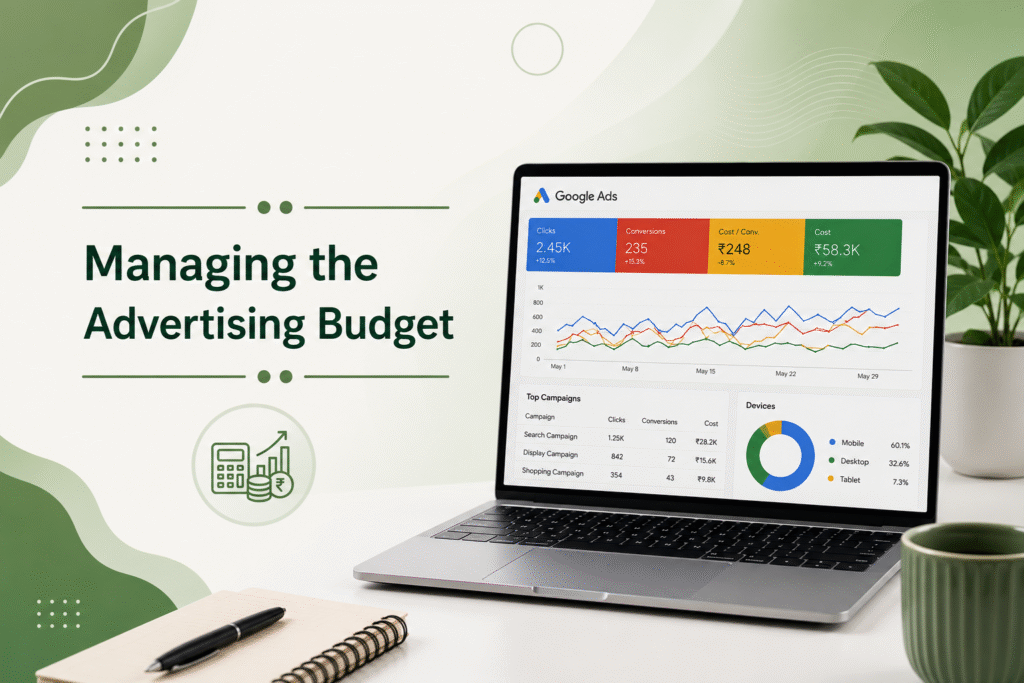
4. Managing the Advertising Budget
A PPC budget should be connected to business objectives.
Simply spending a fixed amount every day doesn’t guarantee results.
A Google PPC expert can monitor where the budget is being spent and identify campaigns, keywords, products, locations, or audiences that are contributing to meaningful results.
The focus should be on questions such as:
- Which campaigns generate conversions?
- Which keywords attract qualified traffic?
- Where is spend being wasted?
- Which services have the strongest demand?
- What is the cost per conversion?
- Which campaigns have room to scale?
Budget decisions should be based on performance data rather than assumptions.
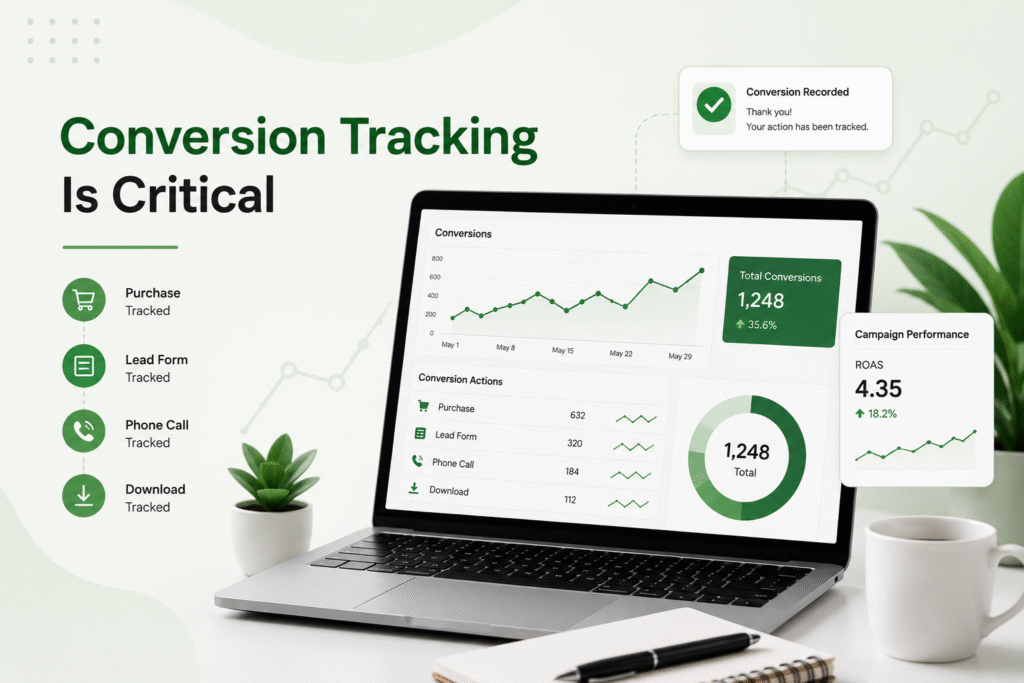
5. Conversion Tracking Is Critical
One of the biggest mistakes businesses make with PPC is focusing only on clicks.
A campaign can generate hundreds of clicks without producing meaningful business results.
Conversion tracking helps connect advertising activity with actions that matter to the business, such as:
- Purchases
- Lead form submissions
- Phone calls
- App installations
- Sign-ups
Google recommends setting up conversion tracking so advertisers can understand what happens after people interact with their ads and use that information to optimize campaigns.
Without reliable conversion data, it becomes much harder to determine which parts of a campaign are actually working.
6. Improving Ad Quality and Relevance
Google’s Quality Score is a diagnostic tool that can help advertisers understand potential issues with keyword-level ad quality.
It considers three main components:
- Expected click-through rate
- Ad relevance
- Landing page experience
Google specifically notes that Quality Score itself is not a key performance indicator or something advertisers should simply try to maximize. Instead, it can help identify areas where ads, keywords, or landing pages may need improvement.
This distinction matters.
A PPC professional shouldn’t chase a higher score just for the sake of the score. The bigger objective is to improve the relevance and effectiveness of the advertising experience.
7. Optimizing Landing Pages
A successful PPC campaign doesn’t end when someone clicks an ad.
The landing page plays an important role in what happens next.
Imagine a customer searches for a specific service, clicks an advertisement promising that service, and then lands on a generic homepage where they have to search for the information themselves.
That creates unnecessary friction.
A stronger landing page should make it easy for the visitor to understand:
What is being offered?
Why should they choose it?
What should they do next?
Google’s guidance specifically recommends keeping the landing page experience relevant to the user’s search and maintaining consistency between the ad and landing page.
8. Monitoring Search Terms
Keyword selection doesn’t mean advertisers know exactly what every person will type into Google.
Actual search terms can reveal new opportunities as well as irrelevant searches.
Regular search-term analysis can help identify:
- New keyword opportunities
- Irrelevant searches
- Potential negative keywords
- Unexpected customer needs
- Changes in search behavior
This is one reason PPC management should be ongoing rather than treated as a “set it and forget it” activity.
9. Using Data to Optimize Campaigns
PPC optimization involves looking at multiple metrics together.
Depending on the campaign, these might include:
- Impressions
- Click-through rate
- Cost per click
- Conversion rate
- Cost per conversion
- Conversion value
- Return on ad spend
- Search terms
- Landing page engagement
A single metric rarely tells the complete story.
For example, a campaign with a low cost per click might look attractive, but if those clicks rarely convert, the low CPC doesn’t necessarily make the campaign successful.
Similarly, a campaign with a higher CPC may still be valuable if it consistently produces high-quality customers.The right metrics depend on the business objective.
When Should You Hire a Google PPC Expert?
Professional PPC management can be particularly useful when:
Your campaigns are spending money without producing enough conversions
If you’re getting traffic but not enough leads or sales, the issue may involve keyword targeting, messaging, landing pages, conversion tracking, or campaign structure.
You don’t have time to manage campaigns
Google Ads requires regular monitoring and analysis. Businesses that don’t have the time or expertise to review campaigns consistently may benefit from professional management.
You’re scaling your advertising
As spending increases, small inefficiencies can become more expensive. Professional management can help identify opportunities and problems as the account grows.
You aren’t sure what is actually working
If you can’t confidently identify which keywords, campaigns, or ads are generating business results, better tracking and analysis may be needed.
Your campaigns have become complicated
Multiple products, locations, services, audiences, and campaign types can make account management increasingly difficult.
What Should You Look for in a PPC Professional?
Not every person offering Google Ads management approaches PPC in the same way.
When evaluating a PPC professional or agency, look beyond claims about generating clicks or achieving a high Quality Score.
Ask about:
Conversion tracking:
How will conversions and business outcomes be measured?
Reporting:
What information will you receive and how frequently?
Optimization:
What will be reviewed and improved regularly?
Strategy:
How will the campaign align with your business objectives?
Landing pages:
Will the website experience be considered as part of the campaign?
Communication:
Will you understand what is being changed and why?
Google also offers official Ads certifications through Skillshop, which can be one useful indicator of platform knowledge when evaluating individual practitioners.
However, certification alone shouldn’t be the deciding factor. Experience, strategic thinking, communication, and evidence of managing campaigns effectively also matter.
Google PPC Expert vs Managing Google Ads Yourself
Managing Google Ads yourself isn’t necessarily a bad option.
For a small and straightforward campaign, a business owner may be able to manage the basics after learning the platform.
The challenge comes when the account becomes more complex or when advertising spend becomes significant.
DIY management requires time for:
- Keyword research
- Campaign setup
- Search-term analysis
- Ad testing
- Conversion tracking
- Budget management
- Performance analysis
- Ongoing optimization
The question isn’t simply whether you can manage Google Ads yourself.
It’s whether doing it yourself is the best use of your time and whether you have the expertise to make decisions that protect and improve your advertising investment.
Final Thoughts
Google Ads can be a powerful way to reach potential customers when they are actively searching for products and services. But successful PPC requires more than launching campaigns and waiting for clicks.
A Google PPC expert brings together keyword research, search intent, campaign structure, relevant advertising, conversion tracking, landing page experience, budget management, and ongoing optimization.
The goal shouldn’t simply be to generate more traffic.
It should be to generate more relevant traffic and more valuable business outcomes from the advertising budget.
If your campaigns aren’t delivering the results you expect, reviewing the complete journey—from search query to ad to landing page to conversion—is often a better starting point than simply increasing the budget.
Frequently Asked Questions
What is a Google PPC expert?
A Google PPC expert is a professional who manages paid advertising campaigns on Google and works to improve targeting, ad relevance, conversions, and overall campaign performance
How much does a Google PPC expert cost?
Pricing varies depending on campaign complexity, advertising spend, services required, and whether you work with an independent professional or agency.
Can a Google PPC expert improve my conversion rate?
They can identify and test factors that may influence conversion performance, including keyword targeting, ad messaging, campaign structure, conversion tracking, and landing page experience. However, no PPC professional can guarantee a specific conversion rate.
Is Google Ads worth it for a small business?
It can be, particularly when there is relevant search demand and the economics of acquiring a customer make sense. The right strategy depends on the industry, competition, customer value, budget, and conversion process.
What is the difference between PPC and Google Ads?
PPC is a broader online advertising model where advertisers pay based on clicks or other defined actions. Google Ads is Google’s advertising platform, which includes PPC-based search advertising among other advertising formats.