
A website is more than an online presence. It is where potential customers learn about your business, explore your products or services, understand your brand, and decide whether to contact or purchase from you.
Whether you are launching a startup, growing an established company, or planning an ecommerce store, building the right website requires more than choosing a design template. You need a clear purpose, suitable platform, useful content, effective navigation, and a user-friendly experience.
A well-planned website can support brand recognition, customer enquiries, online sales, and long-term business growth.
For businesses exploring website development in Mohali or looking for a website design company in Mohali, understanding the website-building process can help you make better decisions.
In this guide, we explain how to build a website step by step, what to consider before launching, and how to create a website that supports your business goals.
"Your Website Is Your Digital First Impression. Make It Count."
Why Does Your Business Need a Website?
A professional website gives your business a central place to communicate with potential customers.
Here are some important benefits:
- Builds business credibility: A well-organized website helps visitors understand your services, experience, and business information.
- Improves online visibility: Search engine optimization can help people discover your business when they search for relevant products or services.
- Generates enquiries: Contact forms, enquiry buttons, and clear calls-to-action make it easier for visitors to connect with your business.
- Supports ecommerce sales: An ecommerce website allows businesses to showcase products, accept orders, and manage online shopping experiences.
- Strengthens brand identity: Your website communicates your brand through its design, messaging, colours, typography, and overall experience.
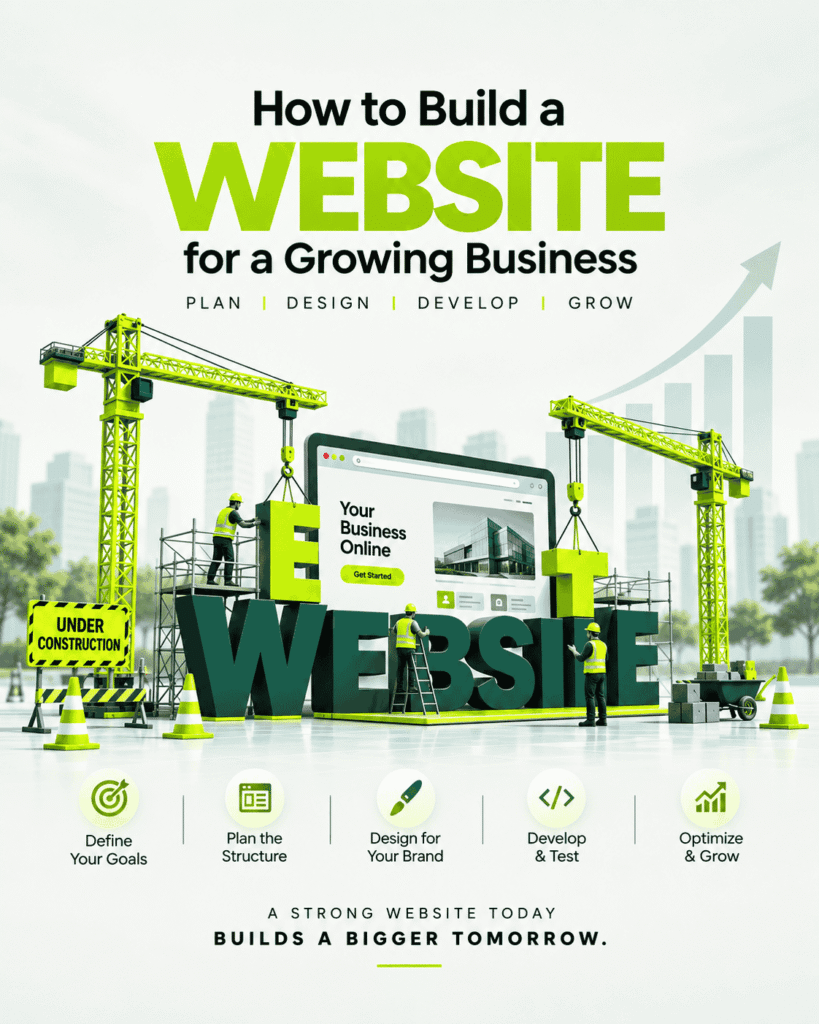
"A Great Website Is Where Your Brand's Success Begins."
What Are the Different Ways to Build a Website?
Before starting development, choose an approach that matches your business requirements, technical capabilities, and future plans.
1. Build a Website Yourself
Website builders offer templates and visual editing tools that allow beginners to create basic websites without extensive coding knowledge.
This can work for portfolios, simple business websites, and early-stage projects.
However, customization and advanced functionality may be limited depending on the platform.
2. Use a Content Management System (CMS)
A CMS allows businesses to create, edit, and manage website content through an administrative interface.
WordPress is a widely used example. It offers themes, plugins, and customization options for different website requirements.
It can be suitable for business websites, blogs, and websites that require flexible content management.
3. Choose an Ecommerce Platform
If your primary objective is selling products online, consider an ecommerce platform such as Shopify.
Shopify provides tools for managing products, collections, payments, orders, and online storefronts.
The right platform depends on your catalogue, integrations, operational needs, and plans for growth.
How to Build a Website in 10 Steps
Step 1: Define Your Website’s Purpose
Start by identifying what you want your website to achieve.
Different businesses have different requirements. For example:
- A service business may need enquiries and consultation bookings.
- An ecommerce brand may need product pages and online checkout.
- A startup may need a website that explains its business model and services.
- A professional may need a portfolio to showcase expertise.
Define your target audience and the main action you want visitors to take.
This will help guide your website structure, content, and design decisions.
Step 2: Choose a Domain Name
Your domain name is your website’s online address. It should be easy to remember, relevant to your business, and simple to type.
Consider these tips:
- Keep it short and recognizable.
- Use your business or brand name where possible.
- Avoid complicated spellings and unnecessary numbers.
- Choose an appropriate domain extension, such as .com or .in.
- Check domain availability before finalizing your choice.
A consistent domain name also helps create a professional brand presence.
Step 3: Select a Reliable Hosting Provider
Website hosting stores your website’s files and makes them accessible online.
When selecting a hosting provider, consider:
- Website loading performance.
- Storage and bandwidth requirements.
- SSL and security features.
- Backup options.
- Technical support.
- Scalability as your business grows.
Your hosting requirements will depend on your website platform, traffic expectations, and functionality.
Some hosted website platforms, including Shopify, provide hosting as part of their service.
Step 4: Choose the Right Website Design
Your website design should reflect your brand and make information easy to understand.
Focus on:
- Clear navigation.
- Consistent colours and typography.
- Readable text.
- Relevant images.
- Easy-to-find contact information.
- Visible calls-to-action.
- Simple page layouts.
A visually attractive website is useful only when visitors can navigate it comfortably and understand what your business offers.
If you are planning web design in Mohali, evaluate design providers based on usability, brand consistency, mobile experience, and business objectives—not appearance alone.
Step 5: Plan Your Website Structure
Before development begins, decide which pages your website needs.
A typical business website may include:
Website Page | Purpose |
Home | Introduces your business and main offering |
About Us | Explains your brand and background |
Services | Describes your products or services |
Products | Showcases items available for purchase |
Blog | Shares useful information and insights |
Contact Us | Helps visitors reach your business |
FAQs | Answers common customer questions |
Your website structure should make it easy for visitors to move from discovering your business to taking the next step.
For more guidance, read our article on Website Wireframing: How to Plan a Website Before You Build It.
Step 6: Create Clear and Useful Website Content
Website content explains your business, communicates your value, and helps visitors make decisions.
Prepare content for every important page before launch.
Your content may include:
- Business introduction.
- Service descriptions.
- Product information.
- Benefits and features.
- Customer testimonials, where available.
- Frequently asked questions.
- Contact information.
- Calls-to-action.
Use clear headings and short paragraphs. Explain what your business offers without unnecessary technical language or exaggerated claims.
Step 7: Add Important Website Features
The features you need depend on your website’s purpose.
For a service-based business, useful features may include:
- Contact forms.
- Click-to-call buttons.
- WhatsApp contact options.
- Appointment booking.
- Service enquiry forms.
- Customer testimonials.
For ecommerce websites, consider:
- Product catalogues.
- Product filters.
- Shopping carts.
- Secure payment options.
- Shipping information.
- Order management.
- Customer support.
- Product reviews.
Businesses exploring strategies for ecommerce should plan these features around their customers’ shopping journey.
Step 8: Optimize Your Website for Mobile Devices
Many visitors access business websites through smartphones. Your website should provide a consistent experience across mobile phones, tablets, and desktops.
Check that:
- Text is readable without zooming.
- Buttons are easy to tap.
- Images fit the screen.
- Menus work correctly.
- Forms are easy to complete.
- Important information is easy to find.
- Product pages and checkout work smoothly.
Mobile usability should be considered during design and development, not only after launch.
Step 9: Set Up Basic SEO
Search engine optimization helps search engines understand your website and its content.
Before publishing, review these essential SEO elements:
Page titles: Give every important page a clear and relevant title.
Meta descriptions: Write concise descriptions that explain what each page offers.
Heading structure: Use one main H1 and organize supporting information through H2 and H3 headings.
URLs: Keep page URLs descriptive and easy to understand.
Image alt text: Describe relevant images accurately.
Internal links: Connect related pages to help visitors discover useful content.
Local SEO: If your business serves Mohali and Chandigarh, include relevant service and location information on appropriate pages.
Avoid inserting location keywords unnaturally. Your content should answer the needs of actual customers.
Step 10: Test and Launch Your Website
Before making your website public, check that everything works correctly.
Use this pre-launch checklist:
- All important pages are complete.
- Navigation links work.
- Contact forms submit correctly.
- Phone and WhatsApp buttons function.
- Images display properly.
- Website works on mobile devices.
- SSL is active.
- Important pages have SEO titles and descriptions.
- No unnecessary placeholder content remains.
- Analytics and relevant conversion tracking are configured.
Once testing is complete, publish your website and monitor its performance.
How to Build an Ecommerce Website That Supports Business Growth
An ecommerce website needs to do more than display products. It should help customers discover items, understand their value, compare options, and complete purchases. When planning an online store, pay attention to:
Product presentation: Use clear product photographs, descriptions, prices, and relevant information.
Navigation: Organize products into useful categories and collections.
Shopping experience: Make cart and checkout processes easy to understand.
Brand consistency: Maintain consistent messaging, visual identity, and packaging across customer touchpoints.
Marketing integration: Connect your website with relevant analytics, advertising, and marketing tools.
For businesses considering Shopify, the platform can provide a practical foundation for managing an online store. However, store planning, design, product architecture, and customer experience still need careful attention.
You can also explore our guide to Ecommerce Website Optimization.
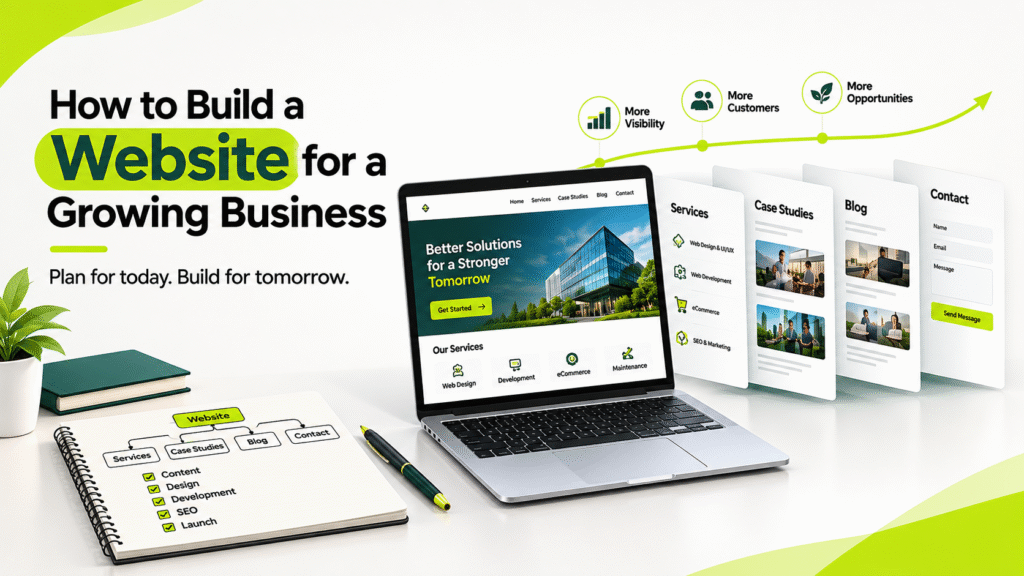
How to Choose a Website Development Company in Mohali
Choosing the right website development partner can influence your website’s usability, performance, and ability to support business growth.
If you are comparing a website design company in Mohali, a web design agency in Mohali, or a website development provider in Chandigarh, consider these factors:
- Portfolio: Review relevant website projects and design quality.
- Business understanding: Check whether the team understands your industry and objectives.
- User experience: Ask how it plans navigation and customer journeys.
- Mobile responsiveness: Confirm that mobile usability is part of the process.
- SEO readiness: Discuss website structure, metadata, and technical SEO.
- Platform knowledge: Choose a platform that fits your business requirements.
- Ongoing support: Understand what happens after launch.
Don’t make your decision based only on the lowest quotation. Evaluate the proposed approach, deliverables, functionality, and long-term requirements.
How Website Development Connects With Digital Marketing
A website is an important part of your overall marketing system.
Digital marketing helps attract potential customers, while your website gives them a place to explore your business and take action.
For example:
- SEO can help people discover your website through organic search.
- PPC advertising can bring relevant visitors through paid campaigns.
- Social media marketing can introduce your products and services.
- Content marketing can answer customer questions and build familiarity.
Businesses researching digital marketing in Mohali may compare a digital marketing company in Mohali or a digital marketing agency in Mohali based on how well its strategy connects marketing activity with website objectives.
Similarly, businesses evaluating PPC services in Mohali or the best PPC company in Mohali should understand how campaigns are tracked and how advertising traffic is directed to relevant landing pages.
Rather than treating website development and marketing as separate activities, connect them through a shared business strategy.
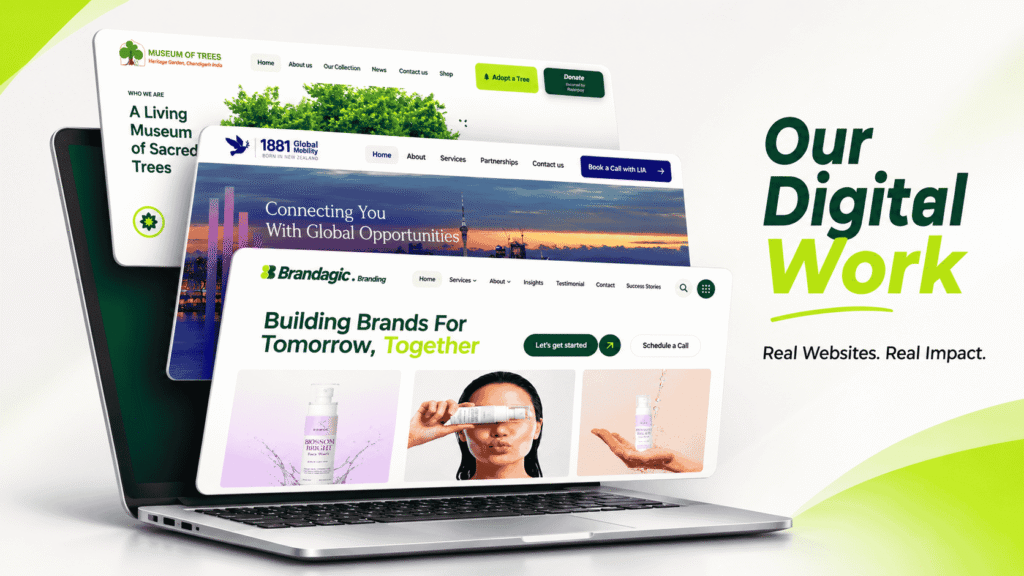
How Brandagic Supports Website and Brand Development
At Brandagic, our approach combines brand strategy, marketing strategy, and business-focused digital support.
For ecommerce businesses, our Shopify Store Development service focuses on strategic store planning, experience-led design, custom development and integrations, optimized product architecture, and launch support.
Our Brand Strategy and Brand Consulting services cover brand positioning, identity development, pricing strategy, packaging design, and brand guidelines.
We believe a website should reflect the business behind it. Its design, content, and customer experience should work together to communicate value and support long-term growth.
If you are planning a new website or improving an existing online store, contact Brandagic to discuss your business goals.
Final Takeaway
Building a successful business website starts with understanding your audience, defining your objectives, and choosing the right platform.
From domain selection and hosting to design, content, SEO, and testing, every step contributes to the final website experience.
For businesses in Mohali and Chandigarh, a well-planned website can support online visibility, customer enquiries, ecommerce sales, and brand development.
Don’t focus only on creating a website that looks attractive. Build one that communicates your value, makes information accessible, and gives visitors a clear reason to take action.
A strong website is not just an online presence. It is an important part of your business’s long-term growth strategy.
Final Takeaway
Product branding helps businesses create a recognizable identity, communicate product value, and differentiate themselves in competitive markets. From product naming and packaging to positioning and online experiences, every element should work together to create a consistent impression.
For ecommerce brands and growing businesses, a clear product branding strategy can support stronger recognition, customer confidence, and long-term business development. Start by understanding your audience, defining your product’s value, and building an identity that customers can recognize and trust.
Frequently Asked Questions
1. How do I build a website for my business?
Start by defining your website’s purpose, choosing a domain and platform, arranging hosting where required, planning your pages, creating content, designing the website, setting up SEO, and testing everything before launch.
2. How much does it cost to build a business website?
The cost depends on the platform, design requirements, number of pages, functionality, integrations, content, and ongoing maintenance. Ecommerce websites and custom functionality may require a different budget from basic business websites.
3. Which platform is best for building a website?
The right platform depends on your requirements. WordPress can suit content-driven and flexible business websites, while Shopify is designed around ecommerce functionality. Website builders may work for simpler projects.
4. How long does it take to develop a website?
The timeline depends on the website’s size, design complexity, functionality, content readiness, integrations, and feedback process. A simple website may take less time than a customized ecommerce store.
5. Why is mobile-friendly website design important?
Mobile-friendly design makes it easier for visitors to navigate, read content, view products, and complete actions on smartphones. It also supports a better overall user experience.
6. How can SEO help my business website?
SEO helps search engines understand your website and can improve its visibility for relevant searches. Good SEO includes useful content, clear page structure, descriptive titles, internal links, and technical accessibility.
7. Should I hire a website design company in Mohali?
Professional support can be useful when you need strategic planning, custom design, ecommerce functionality, integrations, or a website built around specific business goals. Compare providers based on their process, experience, and deliverables.
8. Can I build an ecommerce website using Shopify?
Yes. Shopify provides tools for building online storefronts, managing products, processing orders, and supporting ecommerce operations. The right store setup depends on your business requirements.