
Running paid advertising without knowing how much you should spend can quickly become expensive.
Whether you run a startup, local business, ecommerce brand, professional service, established company, or growing business in Mohali or Chandigarh, the question is usually the same:
How much should I actually spend on PPC?
There is no universal PPC budget that works for every business.
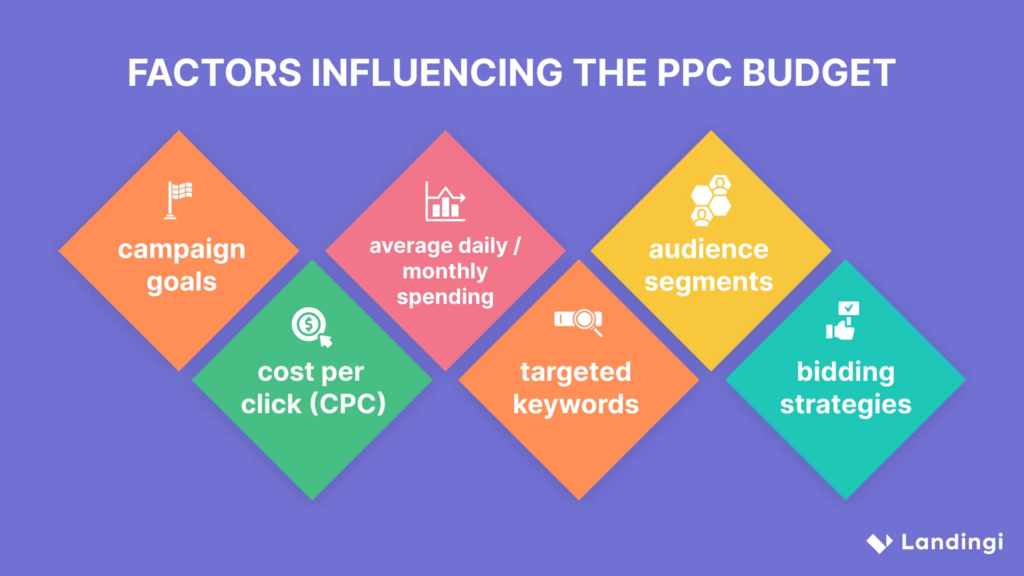
Your ideal budget depends on your objective, average customer value, expected conversion rate, competition, cost per click, sales cycle, and how effectively your website or landing page converts visitors.
A good PPC budget is therefore not simply an amount you decide to spend every month. It is a planned investment connected to your business goals and measurable outcomes.
In this guide, you’ll learn how to build a PPC budget, understand the major cost factors, decide where your money should go, and improve your campaigns over time.
“Sustainable growth begins when you stop chasing every sale and start building lasting value for your customers.”
What Is a PPC Budget?
A PPC budget is the amount of money a business allocates to pay-per-click advertising over a specific period.
PPC can include paid search and other performance-focused advertising activities across platforms such as Google Ads and social advertising platforms.
Your budget can be planned around:
- Daily advertising spend
- Monthly advertising spend
- Campaign-level budgets
- Expected cost per click
- Expected conversions
- Cost per lead
- Cost per acquisition
- Expected revenue
- Return on ad spend
The important point is that your advertising budget should connect to what you want the campaign to achieve.
For example:
A local service business may care primarily about qualified enquiries. An ecommerce business may focus on purchases and ROAS. A new brand may initially care about qualified traffic and customer acquisition. An established business may want to increase sales while maintaining a specific acquisition cost. Shopify similarly recommends beginning with campaign goals and then using factors such as acquisition cost, conversion rate and customer lifetime value when determining an appropriate PPC budget.

“Build an ecommerce brand that doesn’t just grow today but stays strong, relevant, and profitable tomorrow.”
Why Your PPC Budget Shouldn't Be Based on Guesswork
One of the biggest PPC mistakes is choosing a budget because:
“This is what other businesses are spending.”
That isn’t a reliable way to build a campaign.
Two businesses can target the same location and industry but have completely different economics.
2. Build Branding That Supports Ecommerce Growth
One of the biggest PPC mistakes is choosing a budget because:
“This is what other businesses are spending.”
That isn’t a reliable way to build a campaign. Two businesses can target the same location and industry but have completely different economics.
Consider two businesses:
Business | Average Customer Value | Conversion Goal |
Local service | ₹25,000 | Qualified enquiry |
Ecommerce | ₹3,000 | Online purchase |
Their acceptable acquisition costs can be very different. The same applies to businesses targeting Mohali, Chandigarh or the wider Tricity area. A campaign should therefore begin with your own numbers rather than someone else’s budget.
How Does PPC Pricing Work?
Before setting your budget, you need to understand the metrics that influence advertising costs.
1. Cost Per Click (CPC)
CPC = Cost Per Click
You pay when someone clicks on your PPC advertisement under a CPC model. Your actual CPC can vary based on factors such as:
- Keyword competition
- Search intent
- Location
- Ad relevance
- Quality of the landing page
- Bid strategy
- Industry
- Device
- Competition at the time of the search
For example, a highly commercial search such as:
“PPC services in Mohali”
can have very different economics from a broad informational search such as:
“what is PPC advertising?”
This is why keyword intent matters when building a campaign. Shopify also recommends evaluating intent, relevance and cost when selecting PPC keywords.
2. Cost Per Acquisition (CPA)
CPA tells you how much you’re spending to generate a desired conversion.
A simplified formula is:
CPA = Total Ad Spend ÷ Number of Conversions
For example, if you spend ₹30,000 and generate 20 conversions:
₹30,000 ÷ 20 = ₹1,500 CPA
But don’t stop at the number.
A ₹1,500 lead isn’t necessarily good or bad.
You need to ask:
How many of those leads become customers?
If only one out of ten leads becomes a customer, your actual customer acquisition economics are very different from a campaign where four out of ten leads become customers.
3. Conversion Rate
Your conversion rate tells you what percentage of visitors complete the desired action.
For example:
100 paid visitors → 5 enquiries
Your conversion rate is:
5%
Improving conversion rate can make the same advertising budget work harder. That’s why PPC shouldn’t be treated as only an advertising problem.
Your:
- Advertisement
- Keyword
- Landing page
- Offer
- Website
- Form
- Follow-up process
all influence the final result.
4. Return on Ad Spend (ROAS)
For ecommerce businesses, ROAS can be particularly useful.
ROAS = Revenue Attributed to Ads ÷ Ad Spend
For example:
₹2,00,000 attributed revenue ÷ ₹50,000 ad spend = 4× ROAS
However, ROAS shouldn’t be considered in isolation. Product margins, fulfilment costs, discounts, returns, customer lifetime value and other business costs can affect profitability.
How to Determine Your PPC Budget
Instead of choosing an arbitrary amount, use a structured process.
Step 1: Define Your PPC Goal
Start by answering:
What do I want my advertising to accomplish?
Your objective might be:
- Generate leads
- Generate qualified leads
- Increase ecommerce purchases
- Increase calls
- Drive website enquiries
- Promote a specific service
- Launch a product
- Acquire new customers
- Retarget existing visitors
- Build demand for a new brand
Your objective determines how you should evaluate your budget.
For example, a local service business may focus on cost per qualified enquiry, while an ecommerce brand may focus on profitability and ROAS.
Step 2: Know Your Customer Acquisition Economics
Before increasing your PPC budget, understand what one new customer is worth to your business.
Ask:
- What is the average transaction value?
- What is the gross margin?
- How many leads normally become customers?
- How long is the sales cycle?
- What is the average customer lifetime value?
- How much can you reasonably spend to acquire a customer?
This helps you establish a realistic acquisition target.
A business with a ₹1,000 average order value cannot automatically use the same acquisition target as a business selling a ₹1 lakh service.
Step 3: Estimate Your CPC
Use Google Keyword Planner and other research tools to understand the competitive landscape for your target searches.
For a Mohali business, you might investigate searches such as:
- PPC services in Mohali
- PPC company in Mohali
- Google Ads services in Mohali
- Google Ads agency in Mohali
- PPC expert in Chandigarh
But don’t simply choose the keyword with the highest search volume.
Look at:
Intent + relevance + competition + expected conversion potential.
A highly specific keyword with fewer searches can be more valuable than a broad keyword with considerably more traffic.
Step 4: Work Backward From Your Goal
You can use a simple planning formula.
Suppose your target is:
20 qualified leads per month
If your expected conversion rate is 5%, you would need approximately:
400 relevant website visits
If your average CPC were ₹100, the illustrative advertising requirement would be:
400 × ₹100 = ₹40,000
This is not a recommended fixed PPC budget for Mohali or Chandigarh. It is simply an example showing how you can work backward from your objective.
Actual CPC and conversion rates vary significantly by industry, keyword, competition, offer, landing page and campaign quality.
Shopify similarly recommends using CPC, conversion rate, customer lifetime value and other performance inputs to model possible budget scenarios rather than choosing a number arbitrarily.
Step 5: Create Different Budget Scenarios
Instead of creating only one budget, create three.
Conservative
Designed to gather initial data while controlling spend.
Growth
Designed to collect enough data to identify stronger campaigns, keywords and audiences.
Scale
Designed to increase spend after you have evidence that the campaign is producing acceptable results.
For example:
Scenario | Purpose |
Conservative | Test |
Growth | Optimize |
Scale | Expand proven campaigns |
This approach is particularly useful for businesses that are starting PPC for the first time.
Should Small Businesses in Mohali Start With a Large PPC Budget?
Not necessarily.
A larger budget does not automatically mean better results.
A poorly structured campaign can waste a large budget faster than a carefully planned campaign.
For a startup or small business, the initial objective should often be learning what works:
- Which keywords generate relevant traffic?
- Which ads receive clicks?
- Which searches generate enquiries?
- Which audiences respond?
- Which landing page converts?
- Which campaigns generate qualified leads?
- Which keywords consume budget without producing meaningful outcomes?
Once you have reliable performance data, you can make more informed budget decisions.
How to Allocate Your PPC Budget
Your budget shouldn’t necessarily be divided equally between every campaign.
Instead, allocate more money toward campaigns that demonstrate stronger performance.
For example, you might have:
Campaign A
High-quality leads + acceptable CPA
Campaign B
High traffic + poor conversion rate
Campaign C
Low traffic + strong conversion rate
The answer isn’t simply:
“Give every campaign the same budget.”
Instead, investigate why each campaign behaves differently. Shopify recommends allocating spend based on actual platform and campaign performance and adjusting the budget as performance data becomes available.
Don't Forget Your Testing Budget
Your PPC strategy should include room for experimentation.
You may need to test:
- New keywords
- Different headlines
- Offers
- Landing pages
- Ad formats
- Audience segments
- Geographic targeting
- Bidding strategies
- Different calls to action
Shopify’s current guide describes a useful conceptual split between proven campaigns and testing, giving roughly 70% to proven campaigns and 30% to testing as a general rule, while noting that early-stage campaigns may require more testing. Treat this as a planning framework, not a universal rule.
PPC Budget for Google Ads vs Social Media Advertising
PPC isn’t limited to Google Search.
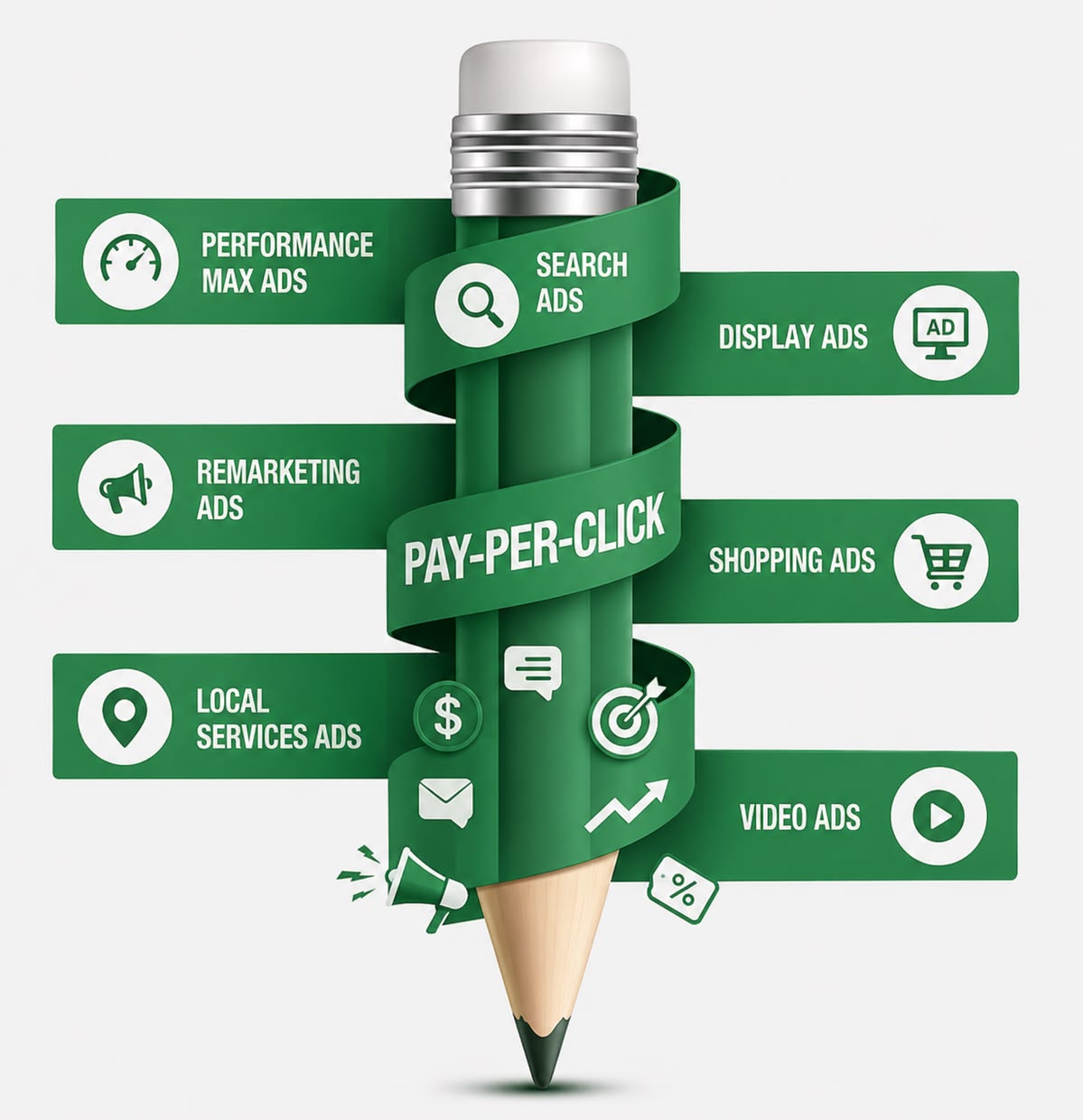
Depending on your business, you may use:
- Google Search
- Google Shopping
- YouTube
- Meta advertising
- Display advertising
- Remarketing
- Other paid channels
The right mix depends on your audience and objective.
For example, someone searching:
“Google Ads services in Mohali”
already demonstrates a strong service-related intent. Someone discovering a marketing service through social media may not have the same immediate intent. That doesn’t mean social advertising is less valuable.
It means the role of each channel can be different.
PPC and Social Media Marketing Should Work Together
Paid search and social advertising don’t have to compete for the same purpose. A business may use search advertising to capture existing demand while social media advertising helps generate awareness, engagement and remarketing opportunities. This is where terms such as social media marketing in Mohali and social media marketing agency Mohali become relevant to a broader marketing strategy.
For example:
Search → Website → Lead → Remarketing → Follow-up
can create a more connected customer journey than treating every channel independently.
The same principle applies when evaluating best digital marketing services in Mohali: look at whether the strategy connects channels to business objectives rather than simply counting the number of services offered.
Your Landing Page Can Make or Break Your PPC Budget
Imagine paying ₹100 for a click.
The visitor reaches your website.
But the page:
- Doesn’t match the advertisement
- Loads slowly
- Has too many distractions
- Doesn’t explain the offer
- Doesn’t establish trust
- Has a confusing form
- Doesn’t make the next step obvious
Your PPC budget can be consumed without producing the desired outcome. A strong PPC landing page should:
Match the Advertisement
The visitor should immediately understand that they are in the right place.
Have One Clear Objective
Don’t make the user decide between ten different actions.
Communicate Value Quickly
Explain what the visitor gets and why it matters.
Address Objections
Answer common questions before the visitor has to ask them.
Make Conversion Easy
Use a clear CTA, appropriate form length and straightforward next step. Shopify’s current PPC landing-page guidance similarly emphasizes matching the ad’s message and offer, reducing distractions and making the desired action obvious.
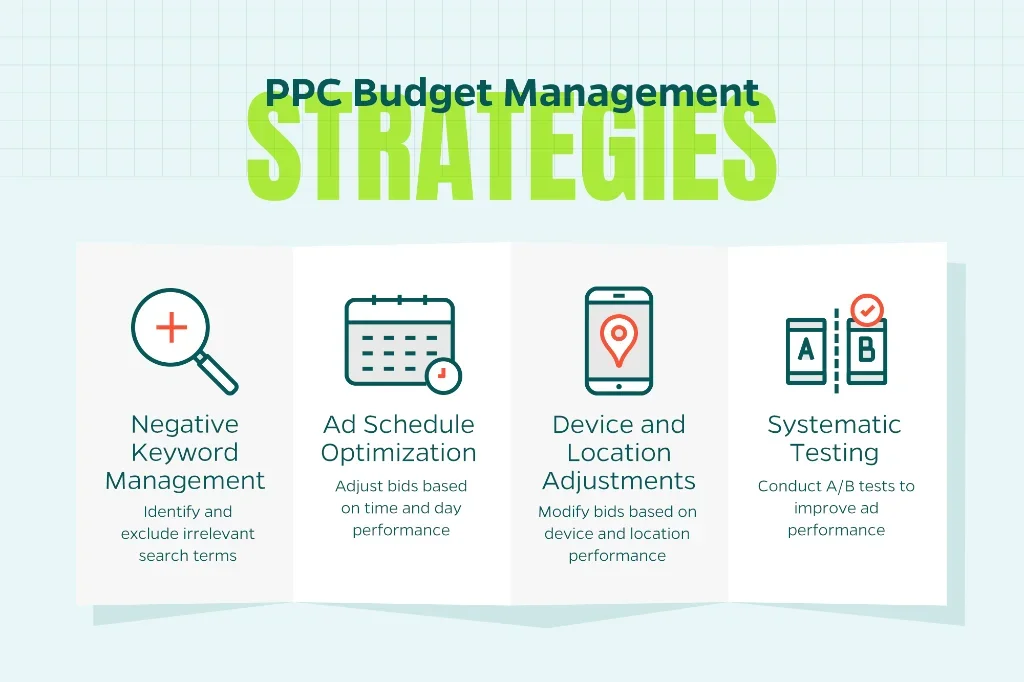
Use Negative Keywords to Protect Your PPC Budget
One of the simplest ways to reduce irrelevant spending is to use negative keywords. Suppose you’re offering paid advertising services. You may not want clicks from people searching for:
- PPC jobs
- PPC course
- PPC training
- PPC internship
- free PPC tools
- PPC tutorial
- learn PPC
- PPC certification
These searches may generate clicks without representing potential customers. Negative keywords help prevent your advertisements from appearing for irrelevant searches. Shopify also recommends identifying negative keywords during keyword research and using them to reduce wasted PPC spend.
How Businesses in Mohali & Chandigarh Should Measure PPC
Don’t judge a campaign only by clicks.
Track the complete funnel.
Metric | What It Tells You |
Impressions | How often your ad appears |
CTR | How effectively the ad attracts clicks |
CPC | What you pay for traffic |
Conversion | How effectively traffic converts |
Leads | Number of enquiries |
Qualified | Quality of enquiries |
CPL | Cost per lead |
CPA | Cost per acquisition |
ROAS | Revenue generated relative to ad spend |
Customer Value | Longer-term business value |
For lead-generation businesses, qualified leads can be more useful than simply counting form submissions.
For ecommerce businesses, look beyond clicks toward purchases, revenue, margin and customer value.
What If Your PPC Campaign Is Spending but Not Converting?
Don’t immediately increase the budget.
First identify where the problem occurs.
Problem 1: Low CTR
Potential issues:
- Weak ad copy
- Poor keyword relevance
- Wrong search intent
- Weak offer
Problem 2: Good CTR but Low Conversion
Potential issues:
- Landing page
- Offer
- Website experience
- Poor message match
- Weak CTA
Problem 3: Leads but Poor Lead Quality
Potential issues:
- Broad targeting
- Irrelevant keywords
- Weak qualification
- Incorrect audience
- Poor ad messaging
Problem 4: Good Leads but Few Customers
Potential issues may be beyond the ad itself:
- Sales follow-up
- Pricing
- Offer
- Sales process
- Customer fit
This is why PPC optimization needs to consider the entire customer journey.
How to Optimize PPC Spending Over Time
Once your campaign has enough data, review it regularly.
Look for:
- High-performing keywords
- Expensive non-converting searches
- Strong advertisements
- Weak advertisements
- High-quality audiences
- Poor-quality audiences
- Strong landing pages
- Weak landing pages
- Device differences
- Geographic differences
- Time-based performance
- Conversion quality
Then make controlled changes.
Increase
Spend where performance is consistently strong.
Reduce
Spend where performance is consistently weak.
Test
Use a controlled portion of the budget for new opportunities.
Pause
Remove campaigns, keywords or ads that consistently fail to meet your objectives. This approach turns PPC from a simple spending activity into an ongoing optimization process.
PPC Budget for Different Types of Businesses
There is no single budget model for every business.
Local Service Businesses
Focus on:
- Qualified enquiries
- Calls
- Location-specific searches
- Lead quality
- Cost per qualified lead
This can be particularly relevant to businesses targeting Mohali, Chandigarh and the Tricity region.
Ecommerce Businesses
Focus on:
- Product-level performance
- Conversion rate
- ROAS
- Customer acquisition cost
- Repeat purchase value
- Product margins
Startups
Start with controlled testing.
The goal is to identify:
- Audience
- Offer
- Message
- Channel
- Conversion path
before aggressively scaling.
Established Brands
Established businesses may have more historical data and can use it to make more informed budget and acquisition decisions.
How PPC Fits Into a Larger Digital Marketing Strategy
PPC shouldn’t exist in isolation. A strong marketing strategy may connect:
Brand Strategy → Website → SEO → PPC → Social Media → Remarketing → Conversion → Retention
This is why businesses searching for a digital marketing company in Mohali, digital marketing agency Mohali, or best digital marketing company in Mohali should evaluate how the agency thinks about the complete customer journey—not just whether it can launch advertisements.
Similarly, digital marketing in Mohali can mean very different things depending on whether the business needs leads, ecommerce sales, brand awareness, customer retention or a combination of objectives.
How to Choose a PPC Partner in Mohali or Chandigarh
If you’re comparing a best PPC company in Mohali, don’t choose based only on claims or the lowest management fee.
Ask:
1. How will you determine my starting budget?
The answer should relate to business economics and campaign objectives.
2. How will you identify valuable keywords?
Look for a focus on intent and relevance, not just search volume.
3. How will you track conversions?
A professional campaign should have clear conversion tracking.
4. How do you handle negative keywords?
This is important for controlling irrelevant spend.
5. How will you judge lead quality?
Generating cheap enquiries isn’t necessarily the same as generating valuable customers.
6. How frequently will campaigns be reviewed?
PPC requires ongoing analysis and optimization.
7. How do you connect PPC with the landing page?
Advertising and website experience should work together.
For businesses looking for a PPC expert in Chandigarh or evaluating PPC services in Mohali, these questions can help separate a strategic approach from simply increasing ad spend.
Where Brand Strategy Fits Into PPC
Your advertisement may be the first interaction someone has with your business.
But the person still needs to understand:
- Who you are
- What you offer
- Why you’re relevant
- What makes your business different
- Why they should trust you
- What action they should take next
That’s where brand and marketing strategy become important.
Brandagic’s approach combines strategy, systems and storytelling, with its core service areas including Brand Strategy, Marketing Strategy and Shopify. For a business preparing to invest in PPC, the objective should not simply be:
“How much should we spend?”
A better question is:
“What should our entire customer journey look like so the money we spend has a realistic opportunity to produce business value?”
PPC Budget Checklist
Before launching your campaign, make sure you can answer these questions:
Business
- What are we selling?
- Who is our ideal customer?
- What is the average customer value?
- What is our margin?
- What is our acceptable acquisition cost?
Campaign
- What is the campaign objective?
- Which locations are we targeting?
- Which keywords represent high intent?
- Which keywords should be excluded?
- Which platform should we use?
Website
- Does the landing page match the advertisement?
- Is the CTA clear?
- Does the page work well on mobile?
- Can users easily contact or purchase?
- Are objections addressed?
Measurement
- Are conversions being tracked?
- Are leads being qualified?
- Are we measuring CPA?
- Are we measuring revenue where applicable?
- Are we reviewing search terms?
- Are we monitoring campaign performance?
Optimization
- What will we test?
- How often will we review results?
- Which campaigns deserve more budget?
- Which campaigns should be reduced or paused?
Common PPC Budget Mistakes to Avoid
1. Choosing a Budget Without a Goal
A ₹50,000 budget means little if you don’t know what outcome you expect.
2. Focusing Only on CPC
Cheap clicks aren’t necessarily valuable clicks.
3. Ignoring Lead Quality
A campaign can generate many leads while producing very few actual customers.
4. Sending Every Ad to the Homepage
A dedicated landing experience can be more relevant to a specific campaign.
5. Ignoring Negative Keywords
Irrelevant searches can consume budget.
6. Changing Everything Too Quickly
You need enough meaningful data to make informed decisions.
7. Scaling Before Finding a Winning Campaign
Increasing spend doesn’t fix a fundamentally weak campaign.
8. Treating PPC as the Entire Marketing Strategy
Paid traffic works best when the broader brand, website, offer and conversion journey are aligned.
A Simple PPC Budget Framework
You can use this framework before launching a campaign:
Business Goal
↓
Target Customer
↓
Target Location
↓
High-Intent Keywords
↓
Expected CPC
↓
Expected Conversion Rate
↓
Target CPA / Customer Acquisition Cost
↓
Initial Testing Budget
↓
Measure Results
↓
Optimize
↓
Scale What Works
This creates a repeatable process rather than relying on guesswork.
Final Takeaway
A good PPC budget isn’t simply the amount you’re willing to spend. It is the amount you can justify based on your business objective, customer economics, expected conversion performance and ability to measure results. For businesses in Mohali and Chandigarh, the right approach is to start with high-intent searches, understand your expected acquisition economics, build a relevant landing experience, track conversions and continuously shift spending toward what produces meaningful business outcomes. Whether you’re a startup testing paid advertising, an ecommerce brand trying to increase sales, or an established business looking for PPC services in Mohali, your goal should be the same:
Make every part of the customer journey work together before simply increasing the advertising budget.
Frequently Asked Questions
1. What is a good PPC budget for a small business?
There is no universal amount. A suitable starting budget depends on your industry, target location, average customer value, expected CPC, conversion rate and acceptable acquisition cost. Start with a controlled testing budget and increase it when the campaign demonstrates sustainable performance.
2. How much does PPC cost in Mohali?
PPC costs in Mohali vary by industry, keyword competition, location targeting, campaign type, bidding strategy and audience. Instead of relying on a fixed market-wide figure, use Google Keyword Planner and actual campaign data to estimate CPC and build realistic scenarios.
3. Is Google Ads better than social media advertising?
Neither is automatically better. Google Ads can capture existing search intent, while social advertising can help with discovery, audience building, engagement and remarketing. The right choice depends on your business objective and customer journey.
4. Should I hire a PPC company in Mohali?
If your business doesn’t have the internal expertise to research keywords, structure campaigns, track conversions, manage negative keywords and analyze performance, working with a qualified PPC partner can make campaign management more systematic.
5. What should I look for in Google Ads services in Mohali?
Look for a provider that understands keyword intent, campaign structure, conversion tracking, landing pages, negative keywords, budget allocation and lead quality—not simply someone who can launch advertisements.
6. How can I reduce wasted PPC spend?
Start by improving keyword relevance, using negative keywords, monitoring search terms, improving landing pages, tracking conversions and reducing spend on campaigns that consistently fail to meet your objectives. Shopify also recommends monitoring funnel performance and dynamically shifting budget based on results.
7. Should PPC be part of my overall digital marketing strategy?
Yes, PPC can be one component of a broader strategy that includes brand positioning, website experience, SEO, social media, content, remarketing and customer retention. The appropriate mix depends on your business goals.
8. Can PPC work for businesses in Chandigarh and Mohali?
Yes, paid advertising can be used to target specific geographic markets, but success depends on the relevance of the offer, keyword intent, competition, campaign setup, landing page and conversion process. Local targeting alone doesn’t guarantee profitable results.